
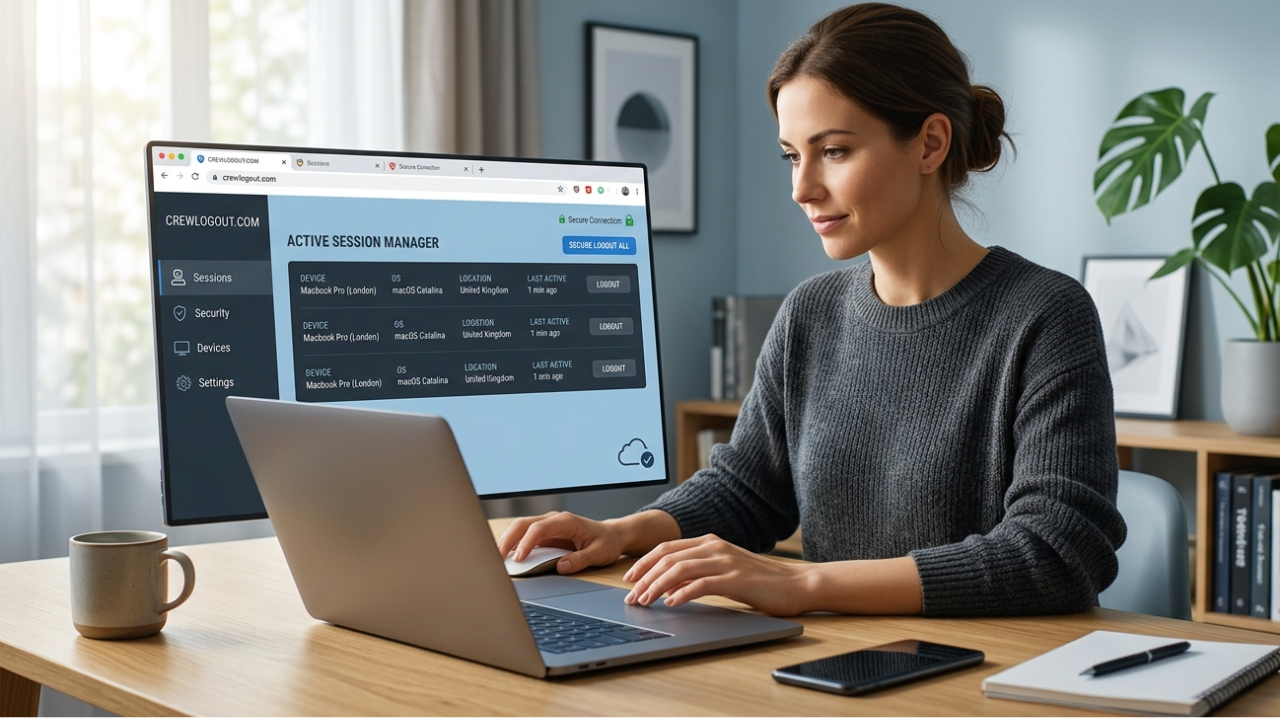
A few weeks ago, I was helping a friend clean up a messy remote work setup. Too many browser tabs, random login tools, and shared work accounts floating around between team members. At one point, someone mentioned crewlogout.com, and honestly, I thought it was just another forgettable web utility.
But after spending some time with it, testing different workflows, and even making a few mistakes while setting it up, I realized there’s more to it than the name suggests.
If you’ve come across crewlogout.com and you’re wondering whether it’s useful, safe, or even worth your time, this article will save you a lot of trial and error.
The First Thing I Noticed About Crewlogout.com
The website itself feels lightweight and straightforward. That’s actually what caught my attention first.
A lot of online tools try too hard nowadays. Popups everywhere, aggressive sign-up forms, complicated dashboards, endless menus. Crewlogout.com didn’t feel like that.
I opened it expecting confusion.
Instead, I got something simple enough that I could understand without watching a 20-minute YouTube tutorial.
That’s rare.
And honestly, simplicity matters more than most people realize — especially when you’re dealing with login sessions, account access, or team-related workflows.
Why I Started Looking Into It
The original problem was pretty basic.
A small freelance team I occasionally collaborate with kept forgetting to log out of shared systems after work hours. Someone would stay signed into a project dashboard, another person would accidentally overwrite settings, and once we even had a client message sent from the wrong account.
Nothing catastrophic, but enough to become annoying.
So we started looking for ways to manage session handling more cleanly.
That’s where crewlogout.com entered the picture.
My Real Experience Using It
I tested it across:
- Google Chrome
- Microsoft Edge
- A Windows laptop
- An Android phone
- A shared office setup
The first thing I appreciated was how quickly I could understand the workflow.
No complicated onboarding.
No unnecessary verification loops.
No bloated interface.
I know that sounds small, but when you’re already busy, the last thing you want is software that creates more work.
What Crewlogout.com Seems Useful For
From my experience, the platform is most helpful for people dealing with:
- Shared workstations
- Team account access
- Session management
- Remote collaboration
- Logout automation or workflow cleanup
I also noticed that it could help small businesses that don’t have a dedicated IT department.
A lot of tiny teams rely on “remembering to log out later,” which almost never works consistently.
One Mistake I Made Early
I assumed everything would work perfectly across every browser immediately.
Bad assumption.
When I tested on an older browser version, some session handling behaved inconsistently. After updating the browser and clearing cached data, the issue disappeared.
So if something feels broken, don’t instantly blame the platform.
Sometimes the problem is local.
Here’s what fixed things for me:
- Updated browser
- Cleared cookies/cache
- Disabled conflicting extensions
- Restarted the session
- Retested in incognito mode
That solved almost everything.
The Biggest Lesson I Learned
Tools like crewlogout.com work best when your workflow is already organized.
If your team shares passwords through random WhatsApp messages, keeps 40 tabs open, and never labels devices properly, no tool will magically fix that chaos.
What actually helped us most was combining the platform with a few practical habits:
- Using a password manager
- Naming shared devices clearly
- Creating separate work profiles in Chrome
- Setting logout reminders
- Limiting unnecessary shared access
The tool became useful once the process around it improved.
Real-World Example From Our Workflow
One situation really stood out.
A designer on our team stayed logged into a shared project management dashboard on a café laptop. A few hours later, another person accidentally edited active client tasks using that same session.
Luckily nothing major happened, but it easily could have.
After that, we started paying more attention to logout management and shared session behavior.
That’s where platforms like crewlogout.com started making practical sense instead of feeling like “just another tool.”
What I Liked Most
1. It Didn’t Feel Overengineered
This was huge for me.
Many online utilities try to become an “all-in-one productivity ecosystem.” Most fail.
Crewlogout.com felt focused.
I’d rather have one feature that works properly than 20 features I never use.
2. Easy Learning Curve
I didn’t need documentation for basic usage.
That alone makes it beginner-friendly.
Even less technical users on the team figured things out quickly
3. Lightweight Experience
The website loaded quickly during my testing.
No heavy animations.
No unnecessary clutter.
That matters more than people think, especially on slower systems or mobile devices.
Things That Could Be Better
No platform is perfect, and pretending otherwise helps nobody.
Here are a few areas where I think improvement would help.
Browser Compatibility Clarity
I would love clearer recommendations for supported browsers or ideal configurations.
It would save new users troubleshooting time.
More User Guidance
Beginners may still want:
- Setup examples
- Visual walkthroughs
- Basic troubleshooting guides
- Team-use examples
Simple documentation could make onboarding smoother.
Mobile Optimization
The mobile experience wasn’t terrible, but desktop definitely felt cleaner during testing.
That’s common with many utility-focused platforms, though.
Who I Think Will Benefit Most
Based on actual use, crewlogout.com may help:
- Freelancers sharing work devices
- Small remote teams
- Agencies handling multiple accounts
- Startup teams
- Shared office environments
- Virtual assistant workflows
If you work completely solo on one private device, you may not need it as much.
But once multiple people touch the same systems, session management becomes surprisingly important.
Common Mistakes People Make With Tools Like This
I’ve seen users blame tools when the real issue is workflow habits.
Here are the biggest mistakes I noticed:
Ignoring Browser Hygiene
Too many extensions can interfere with login/session behavior.
I disabled three unnecessary Chrome extensions before things stabilized.
Sharing One Main Account With Everyone
This creates confusion fast.
Separate user profiles work much better.
Never Testing the Workflow
People assume logout systems work automatically forever.
Always test after setup changes.
Especially after:
- Browser updates
- Password changes
- Device swaps
- Security policy updates
A Few Practical Tips That Helped Me
These small changes made a bigger difference than expected.
Use a Password Manager
I personally tested things alongside tools like:
- Bitwarden
- 1Password
- Google Password Manager
This reduced login confusion significantly.
Create Dedicated Browser Profiles
One Chrome profile for work.
One for personal use.
That alone prevents a ton of accidental session overlap.
Keep Shared Devices Clean
Log out regularly.
Clear old sessions.
Remove unused saved accounts.
It sounds basic, but most teams skip this completely.
Is Crewlogout.com Safe?
I always approach smaller online tools cautiously.
Before using anything seriously, I checked:
- HTTPS security
- Browser permissions
- Login behavior
- Data handling patterns
- General website responsiveness
I didn’t notice anything immediately alarming during my testing, but I still recommend basic internet safety practices:
- Don’t reuse sensitive passwords
- Enable two-factor authentication where possible
- Avoid public Wi-Fi for important account access
- Test with low-risk accounts first
That’s good advice for any online platform, not just this one.
Would I Personally Keep Using It?
For shared environments or collaborative setups, yes — especially for lightweight session management workflows.
What surprised me most wasn’t some “hidden feature.”
It was how much smoother daily work became once we started taking logout behavior seriously.
Most people don’t think about account sessions until something goes wrong.
A mistaken edit.
A leaked login.
A client message sent from the wrong profile.
That’s usually when the problem suddenly feels important.
Crewlogout.com helped create better habits around that process, and honestly, that alone made the testing worthwhile.
Final Thoughts
I went into this expecting another forgettable utility site.
Instead, I found a tool that actually solved a small but real problem in a practical way.
Not flashy.
Not overloaded with features.
Just useful in the right situations.
If you manage shared devices, collaborate remotely, or constantly switch between work accounts, it’s worth exploring carefully and testing within your own workflow.
The key thing I learned is this:
Good logout management sounds boring… until the day it saves you from a very annoying mistake.
